Tuesday, April 14, 2015

The competing frames of higher education

This semester, I've been looking at responses to crises in higher education, and it seems like whenever I turn around, a news or op-ed piece has echoes of the reading I've done this semester.

Yesterday, I ran across this article, which was linked by a colleague and friend on Facebook: "A Good Professor Is an Exhausted Professor: A North Carolina education bill would be a disaster for research and pedagogy" by Rebecca Schuman. While I think Schuman's writing had a tendency toward snarkiness that sometimes undercuts her argument, I generally respect her pieces as they are fairly interesting to read, and I appreciate that she links so extensively to other sources.  This article about North Carolina Senate Bill 593, “Improve Professor Quality/UNC System," sponsored by Republican state Sen. Tom McInnis made me aware of the latest shenanigans from North Carolina's legislature. Sen. McInnis wants to require all faculty in public universities to teach more courses. The bill states that
The Board of Governors shall adopt a policy applicable to all the constituent institutions that requires all professors teach a minimum of eight class courses per academic year. The salary of any professor who teaches less than the required number of classes shall be reduced on a pro rata basis, but may be supplemented with the proceeds of the constituent institution's endowment fund. The policy shall also require an annual independent audit 15 of each constituent institution to determine compliance.
It occurred to me as I read Schuman's that the stories underlying this pending legislation directly relate to the discussion I led last week on Linda Adler-Kassner's The Activist WPA: Changing Stories About Writers and Writing. What I see in this attempt to legislate faculty workloads is a case of competing frames.

For McInnis, this is an attempt to put more experienced professors in front of undergraduate students rather than having adjunct or graduate student faculty teach introductory courses. According to a Daily Tar Heel story by Hallie Dean,
McInnis contends that professors’ primary role is course instruction, saying in a statement that university students should actually be taught by professors, not student teaching assistants...  “There is no substitute for a professor in the classroom to bring out the best in our students,” McInnis said. “I look forward to the debate that will be generated by this important legislation.”
Dean's story also notes that "UNC-system faculty" teach an average of 3.7 course per semester and tenured faculty teach 2.5 courses per semester. At research universities, like UNC-Chapel Hill, teaching a 2/2 course load is more common because the expectation is that faculty are engaged in research in their field. Tenure decisions for 4-year university faculty weigh such research quite heavily, especially at top-tier research institutions. I've been told that one of the common questions asked of prospective new-minted PhD faculty at similar institutions is "when will your first book be published?"

Colleges like UNC want the story to be about research, and Schuman's piece clearly presents the consequences to the university and the wider community if that research story becomes drowned out by McInnis' course instruction frame: The Research Triangle "would quickly lose two of its prongs—the University of North Carolina at Chapel Hill and North Carolina State University."

The cynic in me sees another motive: money. Dean's news piece also quotes Jay Schalin, director of policy analysis at the conservative Pope Center on Higher Education Policy, who talks of the "salary costs for the UNC system."
"Obviously, if teachers are more productive, the schools will need fewer teachers to teach the same number of students,” said Schalin in an email.
So, really, the story here isn't as much about teacher quality as it is about productivity. That is to say, those lazy damned professors should spend their time professing and not wasting our tax money on their silly research and learning.

But isn't the role of a professor to be the lead learner in the class? If the lead learner isn't learning, can we really say we value learning?


Tuesday, March 24, 2015

Response to Bruce Horner's Materialist Critique and texts in conversation

Last week, I talked about being able to see how the readings in the course of my semester-long special topics class mesh together to create a real conversation about crises in higher education. Last week, Margaret Marshall's work gave me a way of understanding the cycles that perpetuate the rhetorics of crises and the deprofessionalization of teaching.

One of the problems Marshall identifies is the way that composition has been identified with the material conditions of labor. I feel like I need to spend more time with her work because I was so blown away with the repeating cycles of crises in education that I couldn't really attend to that part of her argument. That's unfortunate because it's quite clear to me that this week's reading, Terms of Work in Composition: A Materialist Critique by Bruce Horner, is meant to be in conversation with Mitchell.

Horner points out that there is a distinction within the academy between intellectual labor and the material conditions that produce that labor. For academics, that means the product is valued, but the work that goes into making it is not. Research is valued and individual; teaching is not and is owned by the institution. For our students, the sanctioned writing of the academy and whether they can demonstrate that they can conform to those sanctioned forms is valued and their personal lives and the other factors that go into their student lives are not.

 Essentially, Horner argues that we have to "abandon such distinctions, in effect making it our work to articulate the interpenetration of all these as constitutive of our work" (29). He suggests that composition instructors need to join students to investigate the material and social conditions in which we labor and the roles we inhabit in the communities of the academy. Many of the distinctions he makes bend my brain a bit.

Part of this is the dense prose he writes. I see echoes of 1990s academic writing style and that throws me back to my masters work. It was a tad DIY in terms of my concentration, so struggling with this text was a bit of a throwback for me.

Part of it is that I'm not entirely sure how to enact what he proposes--what does it look like "to use the course as an occasion to teach the culture of composition...[and] investigate that being students, in composition courses, has on their writing" (243). I see some potential in Horner's description of his practice of having assignments structured so that "students revisit and revise the positions they have taken in earlier papers, explicitly experiment with different positions and discourse conventions, and reflect on the significance of these experiments" (246). On the other hand, when I see Horner talking about student work in "essay 10," which is a revision of essay 7, I imagine the intersection of 125 students and 10+ essays as something like this

photo by Shehan Peruma, used under CC2.0 nc-nd

Talk about material conditions...

 Part of my bendy brain comes from Horner making me pay attention to the conditions that have been glossed over in higher education and how I might have been complicit in creating the perceptions of my own work as labor, and therefore less worthy of status. Which also brings up the issue of adjunct versus full time labor in higher education.

As a high school teacher, doing adjunct work at the college was a welcome infusion of money that I spent on travel to conferences to further my own education. It was higher education almost as hobby. I don't admit that proudly, especially when I think that there are professional adjuncts and graduate students out there who can't scrape together a living wage but are entrusted with the introductory coursework that forms the basis of so many undergraduate's educations. The material conditions they encounter (lack of office space, lack of status, lack of health care) are often dismissed--"if they don't like being exploited, they should just get another job."

I can't so easily dismiss these professional colleagues, though. They do the same job as I do, and many have more experience teaching at the college level than I. Their labor, though, is somehow valued less than mine only because I made it through a hiring process.

 I can't help wondering what effect the proposed America's College Promise plan would have on the labor of teaching. Will there be more adjuncts? Will introductory composition be largely abandoned by 4-year universities, further marginalizing it as the labor to be done before the intellectual work of high education begins?

 It seems that the more I know, the less I am certain.

Beginner's mind, indeed.

Tuesday, March 17, 2015

PhD and the fire hose

I love to learn. It makes sense then that I started a PhD program. It's no secret that I am a bit of an education addict, and I've talked about getting into this program before.

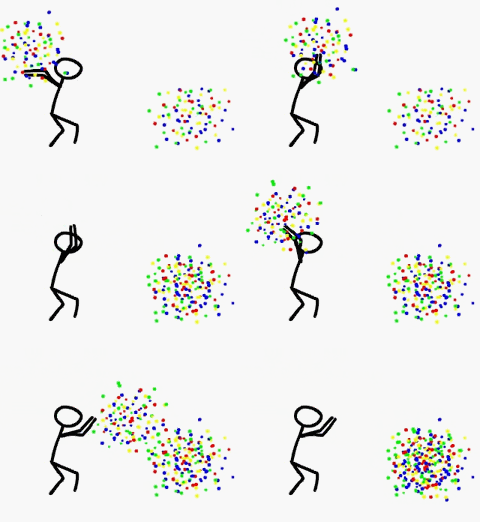
 Now that I'm in my second year of my program, I'm a little bit less overwhelmed. But studying in my program is still quite a bit like drinking out of a fire hose. I am reminded of the more dots meme related to World of Warcraft except that I can't stop the dots.

 This week, I read the significant portion of Margaret Mitchell's book Response to Reform. I quipped on Facebook that the only thing that kept me from throwing the book across the Metro train where I did a significant portion of my reading was that it was crowded and it was rush hour.

That's not to say that I didn't like Mitchell book, or even agree with her arguments. The problem is that I did agree with her arguments. Mitchell gave me language to talk about the patterns that I had intuitively guessed were part of the rhetoric of educational reform, but did not have the knowledge or the historical background to put name to.

I could really spend a couple of weeks talking about Mitchell, but I won't. Because firehose. I can see the logic in the course. I can see the progression in the readings. But, I want to stop and savor. I want to talk about these ideas with my colleagues.

 I'm leaving tomorrow to go to College Conference on Composition and Communication, the annual conference for writing and rhetoric. It's my first national conference at the college level, and I will probably meet some of the scholars whose work I have been reading.

That access is one of the things that I really like about these conferences. If I put myself out there and go to conferences, I meet the most thoughtful individuals in the field. I've have attended NCTE's K-college annual conference every year except one since 2009. The experience is absolutely wonderful, and the innovative, smart people I have met through online and through these national conferences have changed the way I think about teaching and learning. It is through these types of forum where scholars and practitioners of education come together is that there is tremendous potential.

I am perpetually amazed how few of my education colleagues take advantage of these professional development opportunities. When we come together to create knowledge, to share our experiences, and discuss the professional and political horses that move us push, we define and redefine our field.

 Which brings me back to Mitchell because isn't this type of self-directed professional development  vital. Isn't this what is means to profess??

(Apologies to anyone who read this when it was mess. The iPad and Blogger don't get on as well as they should.)

Tuesday, February 24, 2015

Writing as conversation and as process

For the past two days, my five sections of composition have been at the library for instruction. Each class has had 75 minutes with our instructional librarian, who has created a lecture and hands-on activites to get them involved in a research process that will eventually (by mid March), help them produce a draft of a researched essay.

The students have a tremendous amount of choice in their project topics, regardless of 111 or 112. They don't get to choose the product format, which is admittedly "academic" in an attempt to meet some of the learning outcomes of the courses. But at this stage of the game, they are just starting to figure out their topics and what they might do to learn about these interests. What's been most interesting to me has been to watch what happens when they are encouraged not to fixate on the target of the final paper that uses a minimum of 5 sources, but to explore the resources available to them to learn about their topic. 

Since the 112 students have wide open topics (I've used the Vlog Brothers concept of "world suck" as a frame for a problem-solution type essay, which I'll model after solutions journalism writing), we dialed back to concept mapping before we even let them into the databases. Some students were stumped by te idea of being able to write down any word they might associate with their topic. Yet, when I asked them questions like "where does that happen?" or "who does that affect?", they were able to ome up with more words. This makes me wonder what we can do to encourage better questions and makes me think that I might have to finally (in my copious spare time), go back and explore things like The Right Question Institute's work.

Kevin explained to both 111 and 112 students about how databases work and that computers are stupid. Most of them don't really understand how searches work, conceptually, and Kevin has a couple of really interesting anaolgies that help them see that computers don't really think about what a record means.

We also worked out a guided practice that forces them to look at a couple of different databases, record the process of searching, and pay attention to what the resources have to offer to help facilitate better results. Even still, many of them get so fixated on the search results that they don't see anything in the frame around the database. For example, one of the questions asked students to find the 7th source that comes up in their sarch of any database. One of the questions asks the students to write down the MLA citation for that source. Some databases, like Ebsco's, have a "Cite" link in the tools menu on the right have portion of the screen. But, since it wasn't in the center with the article, some students couldn't find this helpful resources. Another question asked students to identify the type of source the 7th record was. Some couldn't do that, despite the database's identifcation of the source as "academic journal" or "news article" in the list of results or from the title listed in the source field of the record.

All of this makes me question what we mean when we say that a student didn't pass a composition course. Is it that the student didn't have the information literacy skills to help them ask and answer questions? Is it that the student didn't have the academic literacy to write in a way that looked like it was "scholarly" or "school-like"? Is it that the student didn't have the motivation to engage in or sustain a research process? Is it that the student couldn't process the reading well enough to write about or in response to it? Or maybe is it that the student's material conditions (work, family life, transportation, etc.) came into conflict with the demands of the course?

I wonder how much of this gets unpacked when we talk about "failing students" or "failing schools"? 

Monday, February 23, 2015

Open enrollment and the urban college

Last week's reading for my graduate class was a selection from James Traub's 1994 book City on a Hill: Testing the American Dream at City College. Traub's discussion of "the underclass" had been roundly criticized by Mary Soliday's 2002 The Politics of Remediation, which we read the week before. Soliday argues that the idea of "underclass," which she presents as a designation that indicates cultural barriers, is often substituted for "working class" to suggest that somehow the urban experience is responsible for lack of achievement. In Soliday's view, the underclass is a compelling image for "neoliberal intellectuals" because it allows failures in remediation to be cast as resistance to assimilation and highlight student need rather than the institutional structures that might need to be addressed. By giving agency to students in their own failures in City College, Traub implies that "college is affordable for everyone, but not attainable for cultural reasons" (Soliday 131).

So, I went into Traub expecting to see an indictment of open admissions, and I did see that. But, what I didn't expect was the ways that Traub echoed current educational debates 20 years later and relied on almost caricatured narratives of underprepared high school graduates and the frustrated, unprepared academics unfortunate enough to teach them.  Honestly, there were parts of the book describing Charles Frye's remedial class that could have been swiped from Welcome Back, Kotter, and strained belief.

On the other hand, Traub does get at the complexity of higher education, a complexity that troubles me.
City College lives at the intersection of these two principles. It cannot fully satisfy both. The only way to ensure that it flourishes as a fine professional and liberal arts institution, as it once did, is to recognize the limits of its social mission. City, and any other college that aspires to high academic standards, cannot be asked to educate large numbers of deeply disadvantaged students, as Ann Reynolds understands. It's not unreasonable to ask that students who complete high school without the academic credits detailed in the College Preparatory Initiative complete them elsewhere, presumably in a community college. Programs like SEEK, which permit students to enter without having satisfied admissions criteria, should stop functioning as entitlements and accept only those students who show special promise. And City cannot allow its commitment ot remedy disadvantage to lead to the sort of "social promotion" that has such a demoralizing impact on the high schools. City must accept students who have a decent chance of succeeding, ply them with help, and then insist that they satisfy not only high expectations by high standards (Traub 204-205).
As a former high school teacher and a new professor in a community college system, I've taught to see the students who are "without the academic credentials" they need to complete college. Four-year institutions raise admissions standards and reduce remediation. Those students who lack the academic credentials now, as in 1994, come to community colleges, and I think that's a perfectly logical and reasonable situation. But increasingly, those community colleges, too ,feel the same pressures that Traub describes here: educate all who come, but on a time-limit. Prepare them for college and careers, regardless of where they are when they start, within a certain timeframe. That's not entirely realistic.

Traub's recommendation to "ply them with help" seems to be the key. Northern Virginia Community College has 4 pathways programs designed to do just that for different populations within the college. In my limited experience here, the Pathways programs do seem to help students navigate the system. But they are likely not cheap to implement. If we're really determined to educate all, then these programs need to be the norm and not the exception. They need to carry students who need additional support into the community college system and beyond.

Do we have the societal commitment to do that?

Tuesday, February 10, 2015

The Politics of Remediation and Free Community College

As part of his "State of the Union" address, President Obama proposed a program that would grant students the equivalent of  two years of full-time tuition at community colleges. Obama pointed to a Tennessee program as a model for this national initiative, In a time where there's tremendous focus on the growing cost of college, this grand idea has drawn significant positive attention, and some equally vehement backlash.  The debate over the "America's Promise" plan for free community college for students who maintain a 2.5 GPA and have family adjusted gross incomes of less than $200,000 reveals some of the stratification and politics of access and representation that Mary Soliday explored in her 2002 The Politics of Remediation: Institutional and Student Needs in Higher Education.

Part of the issue that some have is that Obama has chosen not to expand the Pell Grant, which can be used for tuition at 4-year colleges as well as community colleges. Many of those advocating expansion of the Pell instead of the President's plan have an interest in maintaining enrollment in 4-year universities, which have felt the pinch of budget cuts and the backlash against rising tuition rates caused by the withdrawal of government support for higher education. These articles tend to highlight research (or sometimes "research") that proves that 4-year colleges have better outcomes:
Do I think that community colleges are the answer? I'm not sure. Pell Grants should be expanded, but there are many families that identify as "middle class" that the Pell Grants don't help. Those families could benefit from this plan. But both expanding the Pell and enacting America's Promise require a level of societal commitment to education and to funding that education through government programs that I don't think we have the will to do, despite all of our claims about the value of an education.

Sunday, February 1, 2015

Public and hidden transcripts in the NFL

In my reading for this semester's class, I've come across a concept that seems to be sticking in my head. Richard E. Miller's Writing at the End of the World uses the ideas of public transcripts and hidden transcripts from James Scott's Domination and the Arts of Resistance. To be fair to Scott, Miller's piece is the first place that I've encountered Scott's work. Miller doesn't fully buy Scott's arguments about how performance of these two forces construe social action, but I can see some merit in them as a way to look at what might seem to be shocking outbursts.

Let me share a bit about the two terms, at least as I understand them from Miller's explanation. The public transcript is what "'serves as a shorthand way of describing the open interaction between subordinates and those who dominate'" (Scott qtd. in Miller 127). So, the public transcript is the one that gets valued and validated. It's the story that maintains the status quo. On the other hand, "the hidden transcript is, by contrast, a kind of discourse 'that takes place "offstage," beyond direct observation of the powerholders" (Scott qtd in Miller 128).

Thus, the hidden transcript provides an alternative view of what could be, whether that view is to parody the public transcript or a vision of a different world that is shared by those who are not in power. The subordinates don't really have the access to power to affect change, and often seem to comply with the public transcript because they "are attempting to avoid any 'explicit display of insubordination'...when in fact they have neither embraced this ideology nor resigned themselves to the fate this ideology has in store for them" (Scott, qtd in Miller 133, emphasis in Scott's original work).  

When the hidden transcript does get expressed publicly, it can be quite shocking. But, as Miller notes, "it is important to recognize that the shock arises not so much because the public revelation of the hidden transcript discloses unknown information, but rather because, in the act itself, the revelation threatens to 'tear the public face of the hegemony'" (Scott qtd. in Miller 133). This last piece resonated with me because as I was reading and discussing Miller's work, I kept hearing coverage of Seattle Seahawks running back Marshawn Lynch's refusal to talk to the press during the mandatory media day event.

While an NFL player's refusal to answer the predictable questions that are supposed to produce the predictable responses about team work, team as family, and "giving 110%" doesn't rise to the severity or extreme situations that Scott purportedly describes in his book, the media reaction to the NFL star's almost 5-minute repetition of "I'm here so I won't get fined" was the type of shock Scott describes when hidden transcripts are made public.  The mixed reaction of his fellow players and fans seems to confirm that there are hidden transcripts at work here. 

Certainly, Lynch hasn't endeared himself to the media and repeatedly has brought the type of attention to the NFL that the league does not want, through over the top unsportsmanlike celebrations and three separate arrests during his NFL career. It would be tempting to write this off as just another egotistical display of a selfishly ungrateful superstar. But that's a bit simplistic to me, especially in light of some of the profiles of Lynch that portray him as a guy who loves to play, but doesn't love the limelight and fears both disappointing and being disappointed by others. 

Yes, being available to the media is part of the job, but it's probably not one that many players love. And Lynch's refusal to pretend that it is more than a job requirement threatens our narratives about what we expect from successful athletes.

We want to believe in our teams. We pay for our tickets and our jerseys. We buy coffee mugs and baby onesies to show our allegiance. Even if our team doesn't make the big game, we tune in, at least for the commercials. And we expect the two-week-long show to include the voices of the players. But how did we come to conflate athletic ability and being a good communicator?

We want to think that successful athletes owe something to us for their success, and should demonstrate their gratitude by being nice to us and being role models for good conduct. But that also ignores the pressure that constant scrutiny must place on an individual.

I suspect that why Lynch's refusal to play along with the media hype shocks people because it reminds us that not all of the stories we tell ourselves, and the media perpetuates, are true. Not all football players want the constant celebrity and attention that they get from being at the top of their game. Not all kids who make it out of rough circumstances are willing and able to be role models, even if their rise confirms what we want to believe about hard work. And guys who play professional sports don't actually have meaningful relationships with the fans or with the media who cover them.

So, is Lynch selfish? Is he an ass? Maybe. But maybe we're also a bit complicit because we're looking for stories that confirm the public transcript that plays out every January.


Work Cited
Miller, Richard E. Writing at the End of the World. Pittsburgh: U of Pittsburgh, 2005. Print.

Tuesday, April 22, 2014

S is for Swarm

I mentioned before that the hive we call Big Brown started out as a captured swarm. In this post, I'll share how we caught that swarm.

A very nice lady who lives about 10 miles away called our beekeeping association on April 29, 2012. She had a swarm that about 20-30 feet up in the air and hoped someone could remove it. Her neighbor used to keep bees, but had lost his hive. He had left the equipment in his yard, and Nancy had noticed that a new hive had taken up residence that spring. Then she saw the hive swarm in the morning of April 29, and the cloud of bees perched in her tree. She knew that local beekeepers caught swarms, so she called our club.

The club put out a text message to the swarm call list, and I responded. Eric and I drove to her house in the late afternoon with our bee gear, a cat litter bucket to shake the bees into, and closed box to transport the swarm back home.

Once we got there, we realized the swarm was too far up for us to just shake into a bucket. It took a little time to come up with a plan. After a trip to Home Depot to buy another bucket, a paint roller (which gave us a large hook), and a telescoping handle to put the roller onto. It was quite the McGivver operation, but it worked!

Nancy took pictures of the effort. It was quite a challenge to get the swarm, but we managed to capture most of it and put it into the box. We left the box there overnight to let the rest of the swarm find their way inside, and the next day, we taped up the whole works, drove it home, and installed the hive into the brown boxes where they have lived ever since.

Eric is setting up the ladder as I get the bucket and pole together.
This gives some perspective on how high the swarm WAS.

Eric is standing near the top of that large ladder, and using a tree saw to cut the branch beneath the swarm.
I'm on the ground, moving the bucket underneath to catch the swarm as it falls.

The majority of the swarm landed right in the bucket! You can see it as a dark shadow.
We lowered the bucket and temporarily put a lid over it.
Then we used the cat litter bucket to get the rest of the swarm as bees returned to the cut branch. 

After we caught the swarm, we put shook the buckets into this swarm trap and shut it the top. The boxes had frames with drawn combs and some with foundation.
We hoped this would convince the swarm to stay put until we could move them. 

We weren't able to shake all of the bees into the box,
so we put the buckets near it, pointing toward the opening at the bottom.

We noticed the box had a little extra room that the bees were using as a second entrance.
But the bees there were also fanning, which is the bee signal for "come here!"
Bees who had been out scouting for new hive space were coming back and were joining the others.


We left all of the equipment overnight at Nancy's. When we came back the next evening, it was clear the bees had stayed put.  We taped up the box, covering the entrance and the "secondary" entrance at the top, loaded the whole works into the car, and drove it home.
These bees have really thrived. They are hardy and have now survived two winters with us. Additionally, they boom in population and really pull in quite a bit of nectar. Last spring, they were so prolific, we had to split the hive once to keep it from swarming, which resulted in Little Brown. I suspect that we will have to split it again this year.

The moral of this post is: If you ever see a ball of bees hanging out in a tree or a bush, especially in the spring to early summer, don't try to kill it! It's probably a swarm looking for a new home, and it will be gone within 24 hours. If you want to help it along, call your local beekeepers and someone (like us) will come out to get it and take it to a lovely new hive box.

Sunday, April 20, 2014

Q is for Queen Bee

Two queen cells on the face of a comb.
Cord Campbell, CC BY-NC-SA 2.0
Last weekend, Eric and I spent about 2 hours inspecting our hives on the first warm day where we had the time to do so. We knew three hives had survived the winter, but we wanted to make sure that each had enough room and that the queens were alive and laying eggs.

When we tore down the dead green hive, it was quite clear that the hive had lost its queen--the bees had made many queen cells, which are distinctive. I didn't get any pictures of the cells we found, but this photo from Gord Campbell shows how the cells hang from the comb to accommodate the queen as she develops--she's much larger than worker or drone bees.  The green hive had dozens of these cells.

Big Brown as a swarm, in a photo
sent to us by Nancy.
It was in her backyard.
In a working hive, sometimes it's hard to spot the queen. She's one bee out of thousands, and most queens don't like to be disturbed. It's usually enough proof for us to find eggs because eggs hatch in 3 days or less. But, we really wanted to find each queen and see with our own eyes that she was alive and well.

We started with the "big brown" hive, which is farthest from the house. The brown hive actually started out as a feral swarm we caught in 2012 (that's going to be my S post in a couple of days!), and it has been a prolific hive. It tends to boom early in the spring and wants to reproduce. In fact, we saw that happening last spring, and took out the queen cells, which resulted in Little Brown, our 2nd hive.

When we opened up Big Brown, we saw they had already started to fill the top box with nectar, proving again that they are quite the active starters. We had to go down to the 2nd box from the bottom before we found the queen. Unlike most queens, she didn't try to run and hide. She just
kept laying eggs and working on the frame, completely unperturbed that she was being held 4 feet off the ground so the paparazzi could take her picture. Once we found her, we closed up the hive, and moved to Little Brown, next door

The queen is actually the bee with the dark thorax, which looks like a big black dot in the lower third of the picture. She's much larger than the other bees, but you wouldn't know that from this picture because she has her abdomen in a cell, and is laying an egg. If you look in the right, center, you'll see a bee that looks like it is ALL eyes. That's a drone, the only male in the hive. He's larger than the workers, but he doesn't sting. 
Before we got into Little Brown, I went in to try to find a fresh camera battery. Of course, I have no idea where the charger is, so I decided to limp the camera along (I succeeded). When I came out, Eric was talking to a guy who had stopped when he saw Eric in his bee jacket. Rolando wants to keep bees and had lots of questions. Since we have a couple of extra jackets, we invited him to put one on and watch the rest of the inspections. I might be the professional teacher in the family, but Eric certainly loves to teach people about bees!

Little Brown wasn't as quick to start storing nectar as her mother hive, but she was working. We ended up finding the queen in about the same location as we had in Big Brown. Little Brown's queen wasn't as unflappable; she stopped laying, but didn't immediately head for cover. She let me take some pictures of her, and then we closed up that hive, too.
Little Brown's queen walked around and let me capture her next to her daughters. There's most of a drone in the lower right, which gives a pretty good idea of the relative sizes of queen, worker, and drone.
The white hive, which started as a nucleus hive we purchased from Pat Haskell of the Bee Keepers of Northern Virginia club, has been with us since 2012, too. She and her husband Jim raise bees out in Luray, at their mountain house, and teach beekeeping classes. The green hive, which didn't make it through the winter, was also a nuc hive we bought at the same time. If you had asked me which I thought wouldn't make it, I would have said the white hive. But they are still plugging along.

The hive hadn't really filled much of the 4th box we had added a week earlier, but they were clearly about to have a population boom. We found lots of capped brood inside in the 3rd box. The queen was located down in box two, and ran around a bit. These have always been a "runny" hive--they don't like to sit still when we inspect them. I still managed to catch her for a couple of quick pictures before we closed up the last hive.
The White Hive queen has different coloration than the others. I love how varied these bees are.

We're going to watch Big Brown pretty closely, and will probably add another box to give them room to store more nectar. Now that the weather has warmed up, all three hives are making the most of the emerging flowers. I caught them working the purple deadnettle and dandelions this week. I hope this bodes well for the honey harvest this year.


Tuesday, April 15, 2014

M is for mornings...and more

This is my spring break week. But, as I'm a graduate student in addition to a teacher, I have been working. So, I've kept to some of my routines. One of those is early mornings. Sure, I take naps (N is tomorrow, and I could wax on and on about naps), but I'm trying to keep to roughly the same morning schedule.  As I'm married to someone who isn't a teacher, I have extra incentive.

My plan was to get a shower after Eric left for work around 6 a.m., and go to the local Starbucks for coffee and writing time. I have a draft of a paper due tomorrow, and I've spent the last two days reading, thinking, and researching. Once Eric left around 6, I figured I could get myself together and be productive by 6:30 or 6:45.

My morning plan did not
include a yogurt container
in the cup holder...
That's not quite what happened. Instead of sitting at the local Starbucks, I found myself driving this yogurt container to a Civil War battlefield near my house at around 6:45.

This morning, Eric got up around 5, and I stayed in bed with the cats while he showered. Abi likes to spend a little time letting me know he's happy to be alive by yelling and purring at me, and I like to indulge us both before I get up to feed him. Once he was fed, I got some things together for Eric's lunch, and saw him off. So far, all was going according to plan, and I went upstairs to get a shower.

When I went into the bathroom, I noticed Penny lurking near the door of the office and extra bedroom. Our split-level house is pretty compact upstairs; almost everything is line-of-sight up there. Abi hadn't finished his food, which we keep in the office behind a baby gate that Penny doesn't seem to know how to jump. She will sometimes sit in front of it, so I didn't think much of it, until she started flipping out and diving around. To my surprise, when she calmed down and turned around, I realize what she was playing with had been the live mouse she had in her mouth.

Standing naked in my bathroom and watching my 13 year old cat walk by carrying the live mouse she just caught was not in plans. Suddenly, I went from calm, competent teacher/graduate student/adult to squealing child. I honestly didn't know what to do. All I knew was that if Penny dropped that mouse in the kitchen, it would go under the stove and we'd lose it.

That's happened before--before Penny came to live with us, Abi once caught a mousy "toy" and brought it upstairs to play. We had to set a live trap to capture that very clever mouse, and I learned then that dumping a mouse within running distance of the house would result in a replay of the action a couple of days later.

Penny, who like Abi has never known hunger or life as a stray, clearly has the hunting instinct, but not the killing instinct. She wasn't interested in this mouse as a meal. This mouse was just the coolest, most interactive toy she ever discovered. She strolled right past me, took her new toy downstairs to an open space in the living room, and put it down. The mouse, sensing its chance, took off, and the chase was on.

While I tried to figure out what to do, she caught it and let it go a couple of times. It wasn't until it ran behind a nightstand near the door that I thought to call Eric and tell him what was going on. Penny had the mouse cornered there, and I had a moment to think. Eric suggested that if I wanted to get the mouse out of the house, I'd have to catch it and release it somewhere.

So, I helped Penny by moving the nightstand, and she handily caught the mouse, brought it back to the open space in the living room, and dropped it again. This time, it went under a bookshelf, which I had to move, and Penny retrieved her mouse as the other cats watched the show.

The teeny mouse waits,
safe in its container,
just before I let it out in a
National Park Service field.
When she brought the mouse into the kitchen, I got a yogurt container and lid. She dropped the mouse on the kitchen floor between her and Abi, who sniffed at it. Penny reacquired it to move it back to the center of the floor, and I leaned over it and encouraged the terrified rodent into the container and snapped it shut. Using a kitchen knife, I cut a couple of holes into the lid while Penny scoured the kitchen floor, looking for her lost mouse. She's a terrific mouser, but not a very deep thinker--the container-mouse connection eluded her.

I did get that shower, and the mouse container stayed safe from the cats in the bathroom sink and on top of the dresser as I got ready to leave.

The mouse cautiously investigates.
I drove the mouse to the nearby battlefield, got out of the car, and took a couple of photos as I sent it on its way. It was understandably a little hesitant to come out of the container at first, but quickly bounded through the rain, into the tall grass, and to its fate.

As I turned to get back into the car, I saw an NPS truck had pulled into the lot and was watching me. I waved, got into my car, and drove off to get breakfast at Cracker Barrel before going back home.

I never did get to Starbucks until the time I was supposed to meet up with a friend to peer review. Some mornings require new plans.


Tuesday, April 8, 2014

F is for flowers (a day late)

Since Eric and I started keeping bees three years ago, I've become much more observant about the signs of spring.

Bees don't really start flying until temperatures get into the upper 50s. Our hives are in a nice sunny location, so I've seen them get warm enough to do cleansing flights near the hives in slightly cooler temperatures. But the hustle and bustle of the spring hive rebuilding doesn't really happen until it gets warmer.

Even before the trees have visible leaves, the bees find pollen. This year, we started seeing activity around the hives and the first pollen collected (that I noticed) on February 21. Though the hives weren't super busy, workers like this one were pulling in pollen regularly enough that it didn't take me long to get a picture of one wearing her "pollen pants" as she returned to the hive with full pollen baskets. In the wider shot, the snow is still on the ground!

Based on a chart from Wikipedia, I think this particular bee was carrying red maple pollen.
We discovered a couple of weeks after these pictures were taken that the second hive in the photo, the "green hive," had actually not survived the winter. The activity we saw around the hive was probably bees from the other hives robbing the honey from the dead hive. 

Pollen may be the first sign of spring, but it's not the most important. See, the bees are still living on whatever they stored from last year (we've supplemented that, but that's another post). So, what we need to make sure the remaining three survive are flowers. Flowers signal the start of the nectar flow, and nectar means the increasing population can find its own food. 

Today, I saw the first concrete sign that the nectar flow will start soon. Most people probably don't even notice this harbinger of honey in my area. It's a little weed called purple deadnettle. Deadnettle and its close cousin, henbit, are some of the earliest nectar sources for bees. They are growing now in our lawn.
Of course, the bees are still working the trees in early April, and they are collecting pollen like crazy.
But it's the flowers that have me looking forward to another honey harvest and another year of watching the bees.

Friday, April 4, 2014

D is for Dust

It took me a long time to settle on a topic today. All of the "d" words I could think of were, well, depressing. It's the end of marking period; I have deadlines looming; my senses feel dulled by lack of rest and lingering illness.

The best I could come up with was "day" or "daylight." But even then, I couldn't quite make "day" coherent beyond something cliche like "I like that it's lighter now. I miss the daylight when winter takes hold."

Then I remembered this:


Shake the dust from Anis Mojgani on Vimeo.

Before last weekend, I had never heard that poem before. But Penny Kittle introduced it to me and to all of the educators who gathered at The Northern Virginia Writing Project's Language and Learning Conference. Penny used it to inspire us to write, inviting us to grab a line, an image, an idea, a cadence from Mojagni's poem and play. She told us to write fast, faster than the censor inside of us who would silence us.

So, I did.

For 3 minutes, I wrote.

Then, she invited us later to go back to that writing, to play with it, to craft it, to see what happened.

So, I did.

And in the spirit of "Don't get it right, just get it written" the moral of James Thurber' s "The Sheep in Wolf's Clothing," I decided to share that draft here.


Shake the dust. 
It’s for me to outrun the censor who would silence my voice. Shake the dust from my feet and fly on the wings of the words on the page--wings from something grounded. Ground up trees, the ground up graphite from a pencil, make marks on the page that let me know the ground beneath my feet and yet leave me with the wings to fly and shake of the dust I must shake off and leave behind. 
 Shake the dust. 
It’s for the student who fears being heard, who so quietly exists on the margin of discovery, but fears to be seen. To cause a scene would be unseemly. She covers her mouth when she smiles and looks away from my eyes. Her I’s are not strong enough to withstand the looks of her peers who look more like me than like her. Shake the dust and meet us halfway. We won’t give that half away to anyone who will cause it harm. Spread your arms and shake the dust.

Thursday, April 3, 2014

C is for Cats

We had a dog, Greta, when I was a kid, and I loved her. But she died when I was 11, and we did not get another. My dad is allergic to cats, so they were never an option. Of course, I always wanted what I could have...

This is Abi from a few years ago. He was born August 30, 1996.
With the exception of when I went to college in Chicago, the two years I moved across the country to go to graduate school, and the year I lived in New Jersey, I have shared my home with cats. In fact, my husband's cat, Abi, has lived with me for longer than my husband! When we married, I lived in New Jersey and Eric was stationed at Langley Air Force Base. Not long after we married, Eric went to Saudi Arabia for 3 months, I looked for a job closer to him, and as soon as I found a new job and a new place, Abi moved in with me.

Amidala was probably born in 1997.
About a year after Abi moved in, and 3 months after Eric joined us, Eric and I bought our first house. We wanted to get a companion for Abi. So, we adopted Amidala from a local rescue agency. The shelter estimated that she was 10 months old. Amidala had been a stray, and we quickly discovered had a gorging problem--if we left the food out and available as we did for Abi, she would literally eat until she made herself sick. One time, she ate so much that it looked like she'd swallowed a cannon ball. That's why we have an automatic feeder to this day.

In addition to being the "lovebug" and always wanting to hang out on my lap, Amidala seems to love sitting on any piece of paper or book she runs across. If there's a single piece of paper on the floor or a chair, she will go out of her way to sit on it.


Eric made a picture of Amidala sitting on his Biology textbook into a meme to amuse a friend. That meme still gets used from time to time.
A couple of years after we moved into the house, I received a message over a listserv I subscribed to from a guy advertising kittens for adoption. He had found a stray who then had kittens. That's how Penny came to live with us. Her copper-colored eyes are obviously the source of her name.

In April 2001, Penny came to live with us as a kitten
Penny has always been an active and curious cat, and likes to be near us.
Here, Eric is showing Penny's paw. She decided walk across a dropcloth where we had been using wood stain.
Her paw was a lovely reddish brown, which you can see near her claw.


Our cats drive me bonkers when they crowd me in bed--they don't seem to sleep on Eric as often as they do on me. My lap becomes a territorial dispute from time to time, too.
Penny lays claim to the lap as I catch up on my DVRed shows.

Abi and Amidala jockey for lap space.
But I love how they meet me at the door, and how they always seem to know when I need a cat nearby. When I broke my ankle in 2004, Penny would curl up next to my cast and purr. I had pictures of that, once upon a time, but they have vanished.

All three cats are all getting to be "of a certain age," and I expect they will be gone soon.

Right now, we're not planning on bringing in more cats or pets for a while. I wonder what life will be like without cat hair on my black clothes or dust bunnies chasing one another under the bookshelves.Though I won't miss cleaning up after them, I will miss them

I admit it. It makes me laugh when cats forget their tongues are sticking out. I tried to pictures of it for years before I caught these two in the act. I've never caught Penny with her tongue out on camera, though.


I'm easily amused.


Wednesday, April 2, 2014

B is for busy

Not long ago, a variety of people in my social media circles shared Tim Kreider's June 30, 2102 New York Times Opinionator blog post, "The Busy Trap." What struck me in Kreider's argument was this:
It’s almost always people whose lamented busyness is purely self-imposed: work and obligations they’ve taken on voluntarily, classes and activities they’ve “encouraged” their kids to participate in. They’re busy because of their own ambition or drive or anxiety, because they’re addicted to busyness and dread what they might have to face in its absence.
 I have found myself too often relying on "busy" as the stock response to the stock "How's it going?" My "busy" status really is "a boast disguised as a complaint" in both in face-to-face and social media exchanges. I'm boasting without boasting about taking classes, engaging in professional development, hanging out with friends, or any number of other activities that gain me status with a particular audience. Sure, I've taken on a lot, but I am the one who chose to do so.

I certainly see that addiction to "busy-ness" reflected in my students' lives. Like Kreider, I can remember large chunks of unstructured time in my childhood, even into my teens. But my students feel the pressure to be constantly engaged. Their hyper-connected worlds never allow for disconnection. They tell me that friends expect nearly instant responses to texts and social media mentions. Even their parents text them during school hours.

I can point to one former student's Twitter time as an example of hyperconnection. This young woman started her Twitter account in early 2011. Since then, she has sent over 51,000 tweets, which twopcharts.com estimates is equivalent to spending 429 hours, writing 140 characters at a time. While I'll grant that this is an extreme example, some celebrities who are considered prolific Twitter users haven't spent near that amount of time. Author John Green (@realjohngreen) has logged over 21,000 tweets in the 5 years and 4 months he has had his account, spending 169 hours on this platform. Actor and blogger Wil Wheaton (@wilw) has spent 363 hours writing over 43,000 tweets in the 7 years since he started using Twitter. This former student has both beat, hands down; she had her account when I taught her and often used it to complain that she didn't have time for other activities. Her "busy-ness" was central in her online and offline identity. Busy is who she was and still is.

In my own life, I've tried to keep myself from using "busy" as a status or a status symbol. I do post busy status updates online, but many of them are the grousing among peer groups that helps us vent a little of the self-imposed pressures. I've also, believe it or not, started saying "no" more often. I'm not managing spring sports events at school, and I don't get to as many events there, either. I'm more consciously trying to "hold a space" as Jim Burke advocated in a blog post that I have taped next to my computer. My scheduled downtime has become more sacred. And perhaps that will help me break free of the cult of busy.

It's a work in progress.


Tuesday, April 1, 2014

A is for Again

So, I got 2 posts into the March Slice of Life challenge, and then I let life overwhelm me. Even now, my to do list looks more like a volume of the encyclopedia than a list. But I find myself looking to another blogging challenge to help me write more than academic work and assignments.

It's easy to fall into the trap of busy-ness (I sense tomorrow will be an easy blog) yet again. Yet, I know that daily writing actually sustains me in a way that combats the feeling of being overwhelmed. Somehow, the idea of 26 posts in a month seems like a more attainable goal, as if one "cheat day" of not blogging will make a difference.  Maybe it will; maybe I'm foolong myself. But here I go...again.


Monday, March 3, 2014

Slice of Life: Technology as friend and foe

Today, we had yet another snow day. That's the 10th this year. I'm at the point where I'm torn on these "days off." On one hand, I'm happy to not fight with the weather, and I like to have the slower pace I can take at home. But really, these aren't "days off" for me as I tend to work to try to catch up on planning and grading (as with most of me peers, I'm more reactive during the school year than I like to be).  Also, I worry that my students will leave with fewer opportunities to think, discuss, and write than they might need. That's the perpetual fear of most teachers--did the students have enough time?

I also tend to use these snow days to experiment with technology because I want to give students something to do to make sure that we don't lose all two weeks of instructional time. My juniors are supposed to be taking their end of course writing test this week, so I used Google Drive to create space for them to review some of the grammar concepts we had discussed and plan for the writing prompts in groups. I also opened up a space for them on Blackboard to allow them to ask questions about the prompts and to get suggestions about approaches from one another. I suspect some of them will benefit from these online collaborations, and I certainly appreciated seeing them edit their writing to address pronoun reference issue and noting which prompts they found challenging.

Today also gave me a chance to try an add-on that allows for voice commenting on Google Drive. Kaizena allowed me to open students' documents, highlight portions of their text, and record comments to share with the students. I managed to comment on 4 papers, once I figured out the general interface. Three seem to have gone well, but the 4th doesn't seem to want to share my voice comments. I didn't discover this until I had spent several minutes on comments that I may be the only one who can see. And, unfortunately, Kaizena's documentation is non-existent. All that there is are some articles on older versions and a video tutorial.

The insistence of companies to substitute video tutorials for actual manuals makes me more than a little crazy. I cannot always use a video tutorial. Watching a video takes time and attention. I may be searching for a quick answer (as I was today) and skimming a manual for the answers I need is so much faster. I may not be able to devote my attention to the video, especially if the software is one I'd use while I taught. Or, I may not be able to play something I'd have to listen to because it would disrupt others around me.  Videos aren't a substitute; they are a supplement.

So, while I like Kaizena in concept, I'm not sure that I'm willing to devote much more time to it until the documentation improves. I still like the idea of voice commenting, especially when I can use the comments as instructional, but I'm going to look elsewhere for a tool that will be easier to implement.

Sunday, March 2, 2014

Slice of Life: New starts


Sometimes, it's easy to get so caught in the day to day scramble that things get dropped. This blog is one of those things.

So, what has consumed me? Well, a new PhD program, for one. During last year's Slice challenge, I wrote about the idea of this program and a meeting I attended of potential students as part of the accreditation process. I loved the idea of it, but I knew I wouldn't be able to leave the classroom to be a full-time student.

Then, on June 3, I got word that the program had been approved and would be accepting applications for the fall 2013 cohort. The online application would be available on 6/15, and the deadline would be 7/10. After a nervous couple of weeks, I found out I wouldn't have to that the GRE due to the tight timeline. What a relieve that was for me, as I haven't taken a math class since the late 1980s!

Of course, I was still in the midst of the school year, which didn't end until late June, so I couldn't even think about working on my package until after the application was available. Starting on June 24, the first day after school ended, I went into overdrive:
  • requested all of my transcripts, 
  • spent a short forever making my resume into a curriculum vitae, 
  • went digging for old academic, professional, and personal writing samples, 
  • requested letters of recommendation, and 
  • started working on a personal statement.  
I even managed to convince a friend from the Northern Virginia Writing Project to apply, too.

By July 9, everything was in or on its way, and by July 26, while on a road trip, I received the following:

Dear Christine: 

Congratulations!  It is my pleasure to inform you that the Committee on Admissions has approved your application for graduate admission to the College of Humanities and Social Sciences' Writing and Rhetoric - PHD program for the Fall 2013 semester. The following will assist you in confirming your admissions offer and in getting you started as a graduate student.

I was ecstatic.

I'm on my second class now, and I'm challenged to find time for much else. But, I'm also stimulated and engaged by the learning and happy to be part of a wonderful community of students in the first cohort. The cognitive dissonance of upending everything I am doing with everything I'm learning gets overwhelming at times, but my peers and professors talk me off the ledge. I feel pretty fortunate, even when I'm exhausted and crazed.

The funny part is that I am still blogging as a requirement of my current class. It's just that this hasn't been the forum for it. At first, that troubled me. But, now that the Slice of Life challenge is back, I think I'm ok with having that separation.

Here's to as much slicing as I can fit in!